
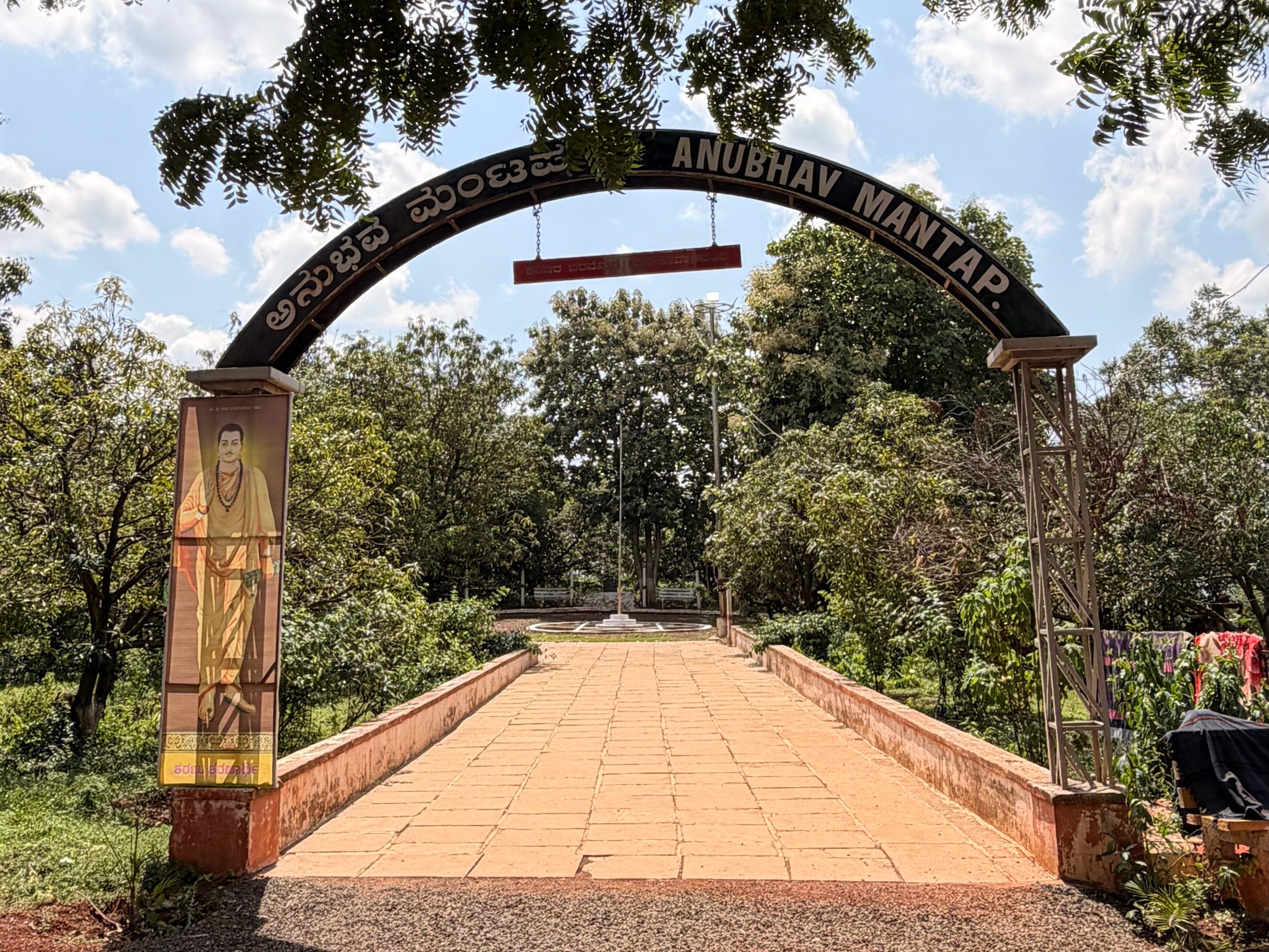
I just couldn’t leave this place.
I was in Basavakalyan taluk of Bidar district, on my expedition to 800+ districts of India. Someone I met along the way told me I had to visit Anubhava Mantapa. I had no clue what this place was or what it was about. On this expedition, I’ve developed a habit, go to the place first, then read about it, talk to locals, and let the history and culture come to me that way. Somehow the story stays with me longer when I do it in that order.
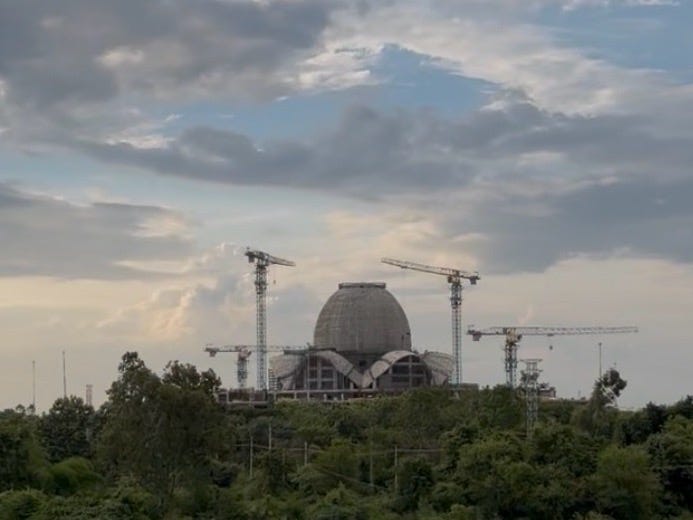
I’d started that day with nearly three hours at the Basavakalyan Fort, then set out in the early afternoon to find Anubhava Mantapa. On the way, I first stopped at the new Anubhava Mantapa, still under construction, and was told to visit the old one instead. I tried to find it, got lost, and couldn’t find anyone to ask.
I waited outside a well-maintained-looking building for 10–15 minutes, a motorbike parked outside suggested someone was around, but my calls went unanswered. In that gap, the questions piled up: was this even the right place? What exactly was a mantapa? Why was it called Anubhava Mantapa? Could anyone just walk in, or did you need permission? Why hadn’t I asked someone what this place actually was before coming?
Just then I saw a man, late in his 40s, in a shirt and pants, walking on the adjacent road. He didn’t look in a hurry. I’ve often seen people walk like that on the village side — in a rhythm. My call interrupted his rhythm: “Hello Anna… Anna, hello.”
He stopped and looked at me. His face was calm. I asked, “Anna, old Anubhava Mantapa ellide?” (Where is the old Anubhava Mantapa?)
He replied, “Idhar aage hai, mai bhi wahi ja raha hoon. Aa jao.” (It’s this side. I’m going there too. Come with me.)
Somehow he understood I wasn’t a local and switched to Hindi. I’ve noticed people in Bidar speak Hindi well, even the kids — probably because of its geography. Its border touches Telangana and Maharashtra, and it doesn’t take much effort to notice how the food and language here carry the influence of Hyderabad and Maharashtra both.
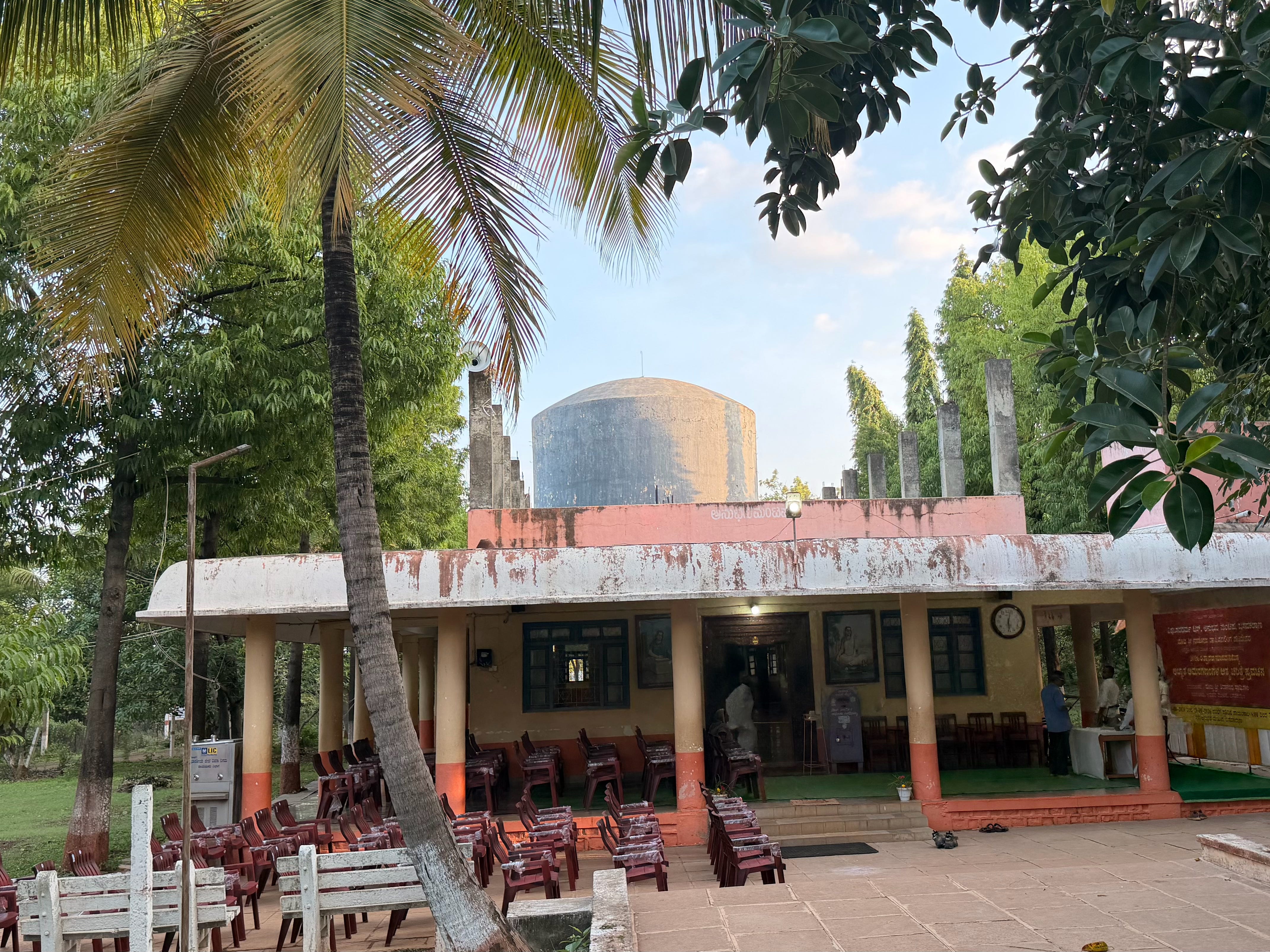
Finally, I arrived at the Anubhava Mantapa. It was a secluded place with a peaceful, almost ashram-like feel.
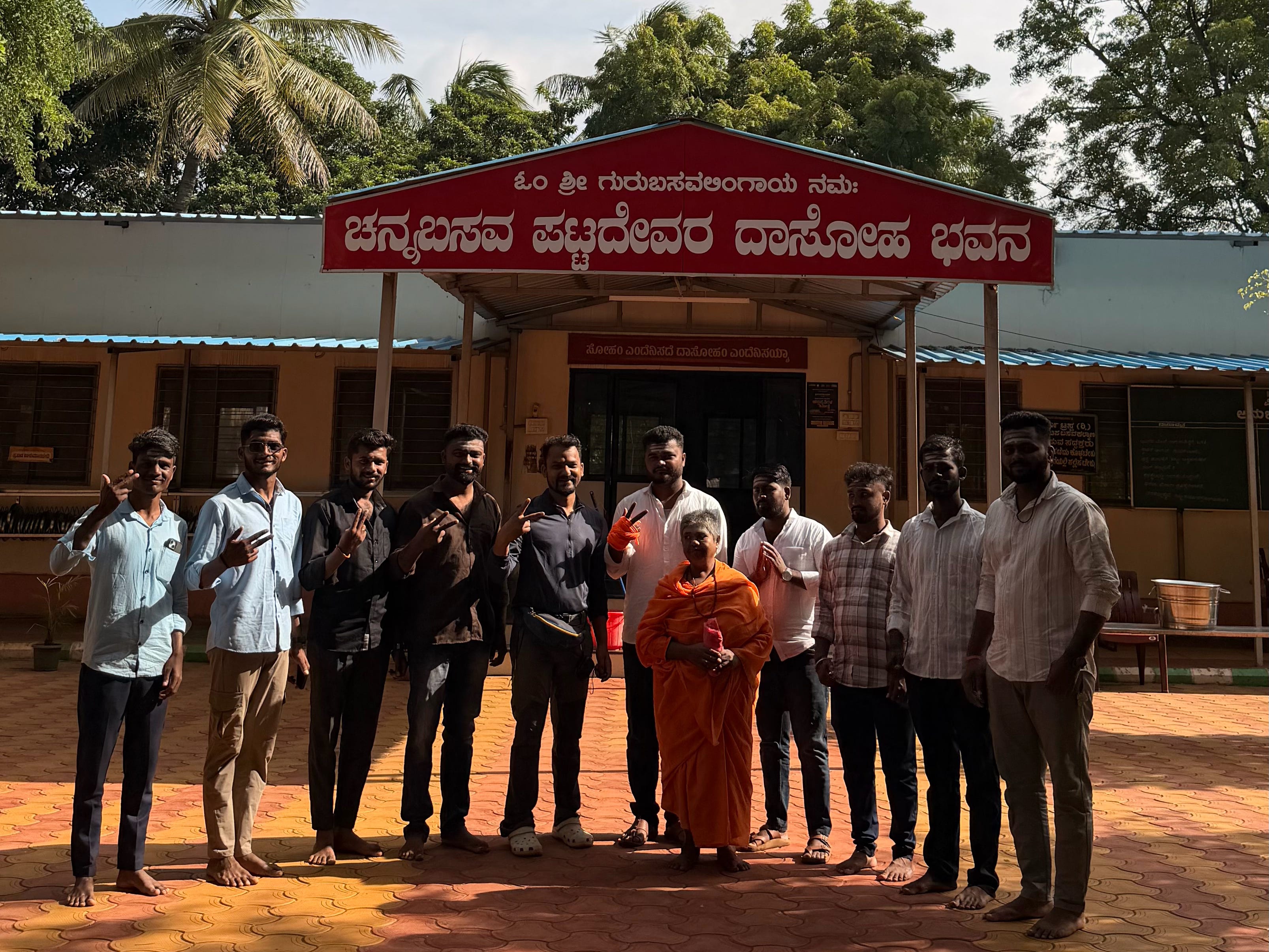
When I reached, a couple of old ladies were sitting in the veranda. We made eye contact, and they looked curious — not sure if it was my fully geared-up look, or the bike loaded with some 50 kg of luggage and a top box, that caught their attention. Whatever it was, they had a lot of questions, a few of them in Kannada. I’m learning Kannada on this journey — I can read and write, and I’ve picked up some daily-use phrases — but I couldn’t confidently follow what they were asking. I assumed it was the usual: which village are you from? (In Karnataka, locals ask which village rather than which place, and depending on context it can mean village, city, or even state.) So I said, “Bihar.” I was happy to see the surprise on their faces. They had more questions, but a wise lady among them interrupted the interrogation and told me to have prasada first.
In the Karnataka temples and devotional places I’ve been to, prasada means a full meal — unlike in the north, where it’s usually laddoos or some sweet.
By then my stomach was more than ready. I ignored their curiosity, rushed to the washbasin, took a plate, and stepped into the Dasoha Bhavan. It was a large hall, a few people quietly receiving prasada. I took mine, found a corner, and sat. Sometimes, when I’m tired and hungry, I prefer a quiet meal over conversation.
After finishing, I stepped out and actually started noticing the place — it felt calmer, more peaceful than I’d registered walking in. I sat on the ground in front of the Dasoha Bhavan, under the trees, on the tiled floor, and started reading about where I was. What I found stopped me.
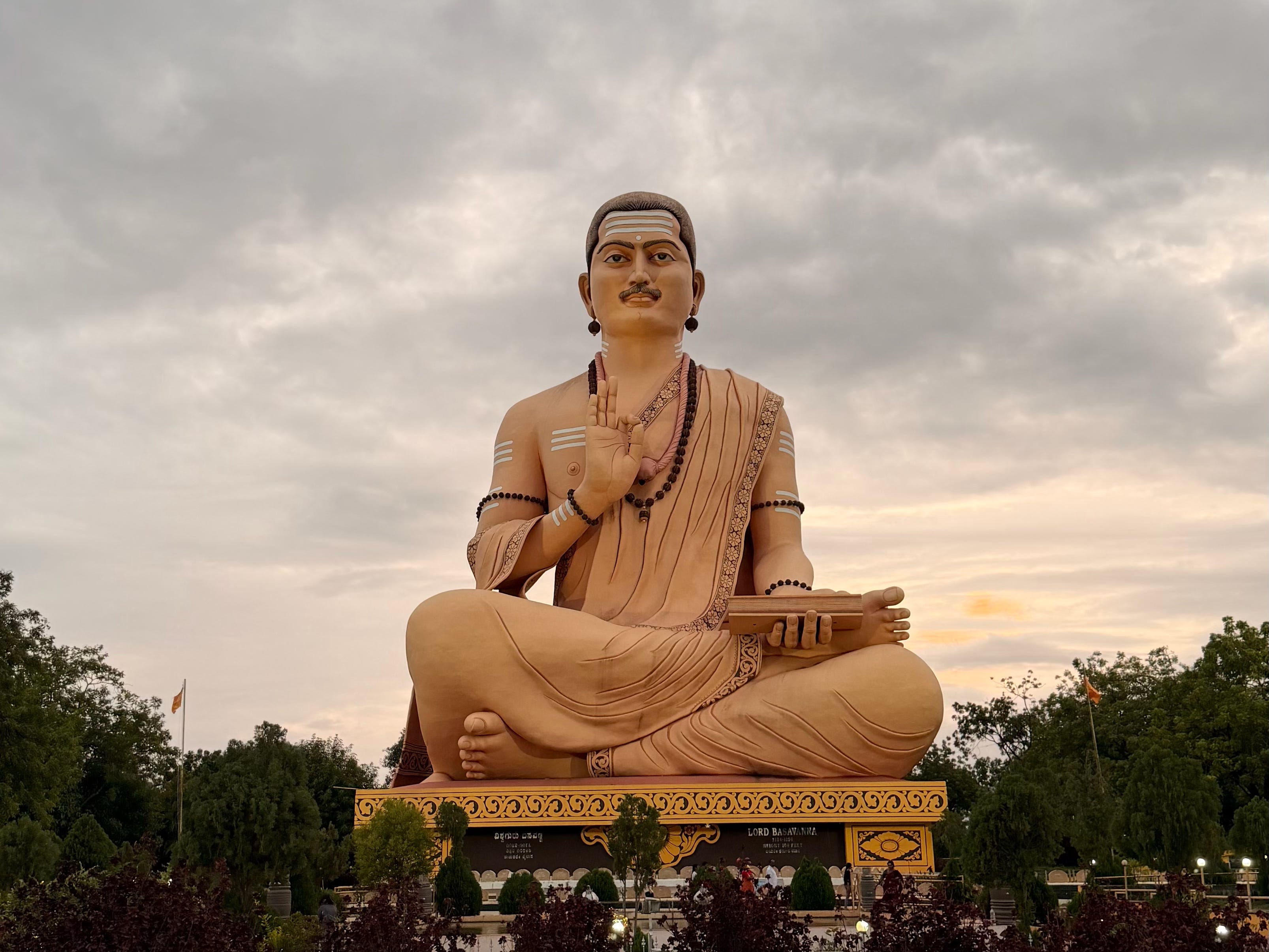
In the 12th century, there was a man named Basavanna, prime minister under King Bijjala of the Kalachuri dynasty. Their capital was Kalyani — now called Basavakalyan in his memory, the same fort I’d walked through that morning. Basavanna was also a philosopher, poet, and social reformer within the Shiva-focused bhakti movement.
As prime minister, he started what came to be called the Sharana movement. People from across caste and gender lines gathered to discuss life and its biggest questions as equals. The place where they gathered is called Anubhava Mantapa — which is why it’s also popularly known as the world’s first parliament, or a religious parliament.
This was unthinkable in 12th-century India. In Kerala during roughly the same era, a Dalit had to stay at least 64 feet away from a Savarna. In Karnataka of that same era, the Holeyas were the region’s major untouchable caste, bought and sold along with the land they worked.
So when a Holeya named Dohara Kakkayya sat inside the prime minister’s own hall, composing vachanas and debating as a philosophical equal, it was unthinkable.
Tradition holds that 770 sharanas — across caste and gender lines — gathered, discussed, and debated as equals, writing vachanas: short, free-verse poems in spoken Kannada that became the core artefact and carrier of Basavanna’s philosophy. It’s a tradition still widely recited and practised today.
Basavanna’s core philosophy is summed up in one vachana: Kayakave Kailasa (ಕಾಯಕವೇ ಕೈಲಾಸ) — work is heaven. His philosophy centered on treating one’s own body and soul as a temple, rather than building an external one. He introduced the Ishtalinga — a personal pendant bearing an image of the Shiva linga, given to every person regardless of birth — as a constant, physical reminder of devotion to Shiva.
Tradition holds that the sharanas arranged and conducted a wedding between a lower-caste bridegroom and a Savarna bride, in Basavanna’s presence. It escalated tensions with the conservative factions to the point of violent clashes, forcing Basavanna to leave both the palace and the city. The sharanas scattered in different directions but carried the vachanas with them. Over time, this movement shaped what became the Lingayat community, with Basavanna regarded as its founding figure.
After leaving Kalyani, Basavanna moved to Kudalasangama — the same place where he’d spent his formative spiritual years as a young man, long before he ever rose to power in Kalyani. He died there a few years later, at the very site where his spiritual journey had begun.
Today, tens of millions of people across Karnataka and the neighbouring states follow Basavanna’s teachings.
This was the story of a man born a Savarna, well-versed in the Hindu scriptures, who started a movement that led him to leave the very palace and city where he’d once been prime minister — a man his devotees, with reverence, call Lord Basavanna.
I’m on the road, and I’ve completed my first district — Bidar. I’ll write again when the road leads me to another story worth sharing.